
LOADING MOCKUP
The problem
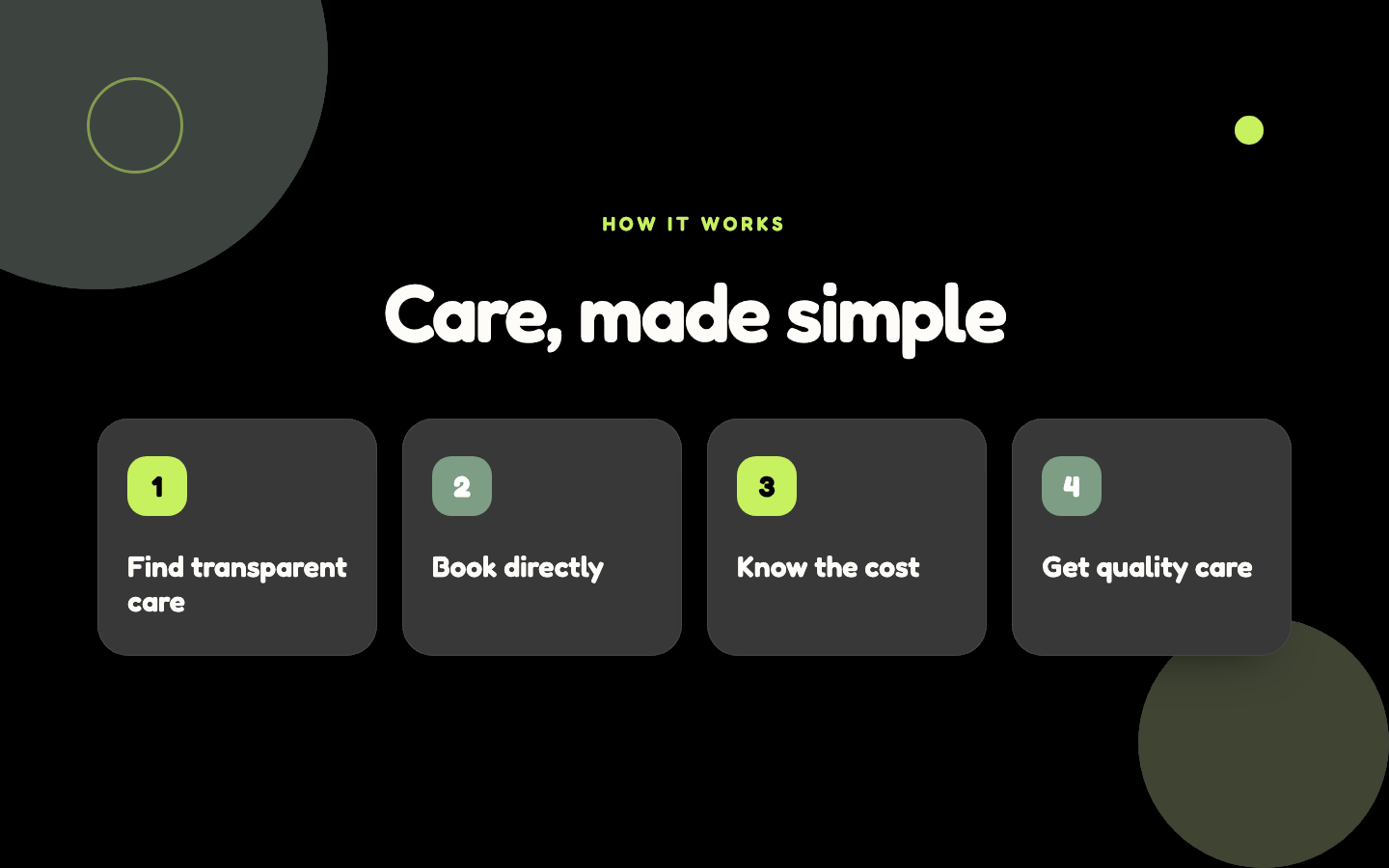
Paying for your own healthcare means ringing around for prices nobody will quote you, guessing what a visit costs before you walk in, and hoping the provider you picked actually handles what you need. bean puts providers, the services they offer and what they charge in one place — and lets people spend the HSA money they already have against it, in the app.
How it is built
bean is a Next.js monorepo on Supabase. Most of the logic sits in the web app’s own API routes; the parts that need a stable runtime, the payment and Plaid webhooks and the job that releases escrow, run in a separate Fastify service. A patient pays bean, bean holds the money, and it only goes to the provider once the visit has happened.
- Web
- Next.js 15 · React 19 · Tailwind · TypeScript
- Data
- Supabase Postgres · row-level security on all 15 tables
- Payments
- Stripe Connect · funds held, released after the visit
- HSA
- Plaid balance read · access tokens AES-256-GCM encrypted
- Search
- By service and zip radius · haversine in SQL
- Booking
- Double-booking blocked by a Postgres exclusion constraint
- Webhooks
- Idempotent · deduped before any state changes
- Auth
- Passwordless and OAuth · rate-limited · audit-logged
- Tests
- 22 passing on the money and booking-state logic
Where it stands
The waitlist is live and splits sign-ups between patients and founding providers, and the provider directory is up with contact details gated server-side. Provider applications and admin review, escrow-backed booking, refunds and the HSA balance are built on the backend. The booking, wallet and dashboard screens are what comes next.